Who Can Manage My WordPress Site? Your Best Options Explained
Who Can Manage My WordPress Site? Your Best Options Explained
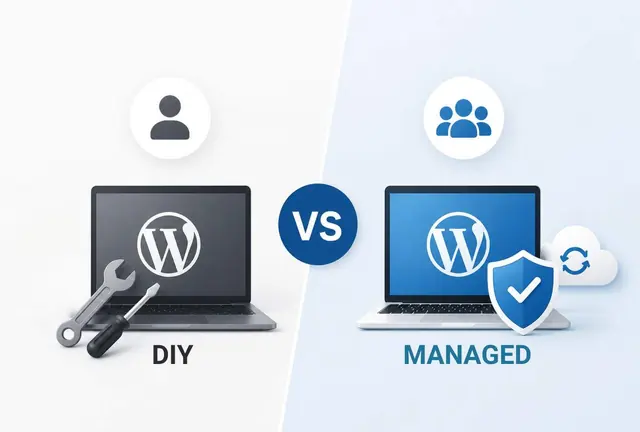
If you're wondering who can manage your WordPress site, there are several options available, including freelancers, agencies, internal staff members, hosting support teams, and dedicated WordPress maintenance services. The right choice depends on your budget, the importance of your website to your business, and how much accountability and ongoing support you need.
For many businesses, the website is no longer a simple online brochure. It generates enquiries, supports sales, publishes content, processes customer requests, and often acts as the first point of contact for potential customers. That means website management is not just about fixing problems when they happen. It involves ongoing updates, security monitoring, backups, performance optimisation, content updates, and technical support.
Understanding the strengths and limitations of each option can help you choose the right approach.
Freelancer
Many business owners start by hiring a freelance WordPress developer or website specialist.
Pros
- Often one of the most affordable options.
- Flexible and easy to hire for specific projects.
- Can provide specialised WordPress expertise.
- Suitable for occasional updates and small websites.
Cons
- Availability may be limited.
- Response times can vary significantly.
- Knowledge is concentrated in one person.
- Long-term continuity can become an issue if the freelancer becomes unavailable.
- May not provide proactive monitoring or maintenance.
Best For
Small websites with occasional support requirements and businesses working within a limited budget.
Agency
A web agency typically provides access to a broader team of designers, developers, and support staff.
Pros
- Multiple team members available.
- Greater reliability and continuity.
- Can handle complex website requirements.
- Access to a wider range of skills.
Cons
- Usually more expensive than freelancers.
- Smaller support requests may compete with larger client projects.
- Some agencies focus more on website builds than on ongoing maintenance.
Best For
Growing businesses that need access to a range of technical and creative skills.
Internal Staff Member
Some organisations assign website responsibilities to a marketing manager, administrator, or internal IT employee.
Pros
- Familiar with the business and its goals.
- Easily accessible during working hours.
- Direct communication and control.
Cons
- WordPress management is rarely their primary responsibility.
- Technical knowledge may be limited.
- Website tasks often compete with other priorities.
- Staff turnover can create knowledge gaps.
Best For
Larger organisations with sufficient internal resources and ongoing website workloads.
Hosting Provider Support
Many website owners assume their hosting company will manage their WordPress website.
In reality, hosting support and website management are usually very different services.
Pros
- Often included with hosting plans.
- Can assist with server-related issues.
- Helpful for basic hosting questions.
Cons
- Typically does not include content updates.
- Usually does not cover design changes.
- Limited assistance with plugin conflicts and custom functionality.
- Focuses on hosting infrastructure rather than business website management.
Best For
Businesses that only require server support and handle website management elsewhere.
Dedicated WordPress Maintenance Service
A dedicated WordPress maintenance service focuses specifically on keeping websites secure, updated, functional, and performing well.
Unlike project-based support, maintenance services provide ongoing website management.
Pros
- Proactive updates and monitoring.
- Regular backups and security management.
- Ongoing technical support.
- Accountability through structured processes.
- Predictable monthly costs.
- Reduced risk of website issues going unnoticed.
Cons
- Ongoing monthly investment.
- Not always the cheapest option initially.
Best For
Businesses that depend on their website for leads, enquiries, bookings, sales, or customer communication.
Which Option Is Best for Your Business?
The right answer depends largely on the role your website plays in your business.
Best for Budget-Conscious Businesses
A freelancer is often the most affordable starting point. If your website changes infrequently and is not business-critical, this can be a practical solution.
Best for Accountability
Agencies and dedicated maintenance services generally provide stronger accountability because responsibility is shared across a team rather than resting with a single individual.
Best for Business-Critical Websites
If your website generates enquiries, supports customers, publishes content regularly, or contributes directly to revenue, a dedicated WordPress maintenance service is often the safest option.
The cost of website downtime, security issues, slow performance, or delayed updates can quickly exceed the cost of ongoing management.
Why Ongoing Website Management Matters
Many website issues develop gradually rather than appearing overnight.
Plugins become outdated, security vulnerabilities emerge, backups fail, forms stop working, and performance can decline over time. Without regular oversight, these issues may remain unnoticed until they affect customers or business operations.
According to the official WordPress security guidance, keeping WordPress core files, themes, and plugins updated is one of the most important steps in maintaining website security and stability.
For business websites, ongoing management helps ensure that small issues are identified and addressed before they become larger problems.
Frequently Asked Questions
Can I manage my WordPress site myself?
Yes. Many business owners manage their own websites. However, as websites become more important to business operations, the time and technical knowledge required often increase.
Does my hosting company manage my WordPress website?
Usually not. Most hosting providers manage the server environment but do not provide ongoing website updates, content changes, security management, or technical support for WordPress itself.
Is a freelancer enough for WordPress management?
For smaller websites with limited requirements, a freelancer may be sufficient. Businesses that require ongoing support and faster response times may benefit from a dedicated maintenance service.
What does WordPress maintenance typically include?
Services often include software updates, backups, security monitoring, performance checks, technical support, and website change requests.
How do I know if my website is business-critical?
If your website generates leads, supports customer enquiries, accepts bookings, processes orders, or plays a significant role in your marketing, it should generally be considered business-critical.
Also, read
Keep Your Website Running Without the Ongoing Work
Managing a WordPress website involves far more than occasional updates. Security monitoring, backups, plugin updates, performance checks, content changes, and troubleshooting all require ongoing attention.
If your website plays an important role in generating leads, supporting customers, or growing your business, professional WordPress management can help reduce risk and free up valuable time.
Pressific's WordPress management service provides ongoing maintenance, support, monitoring, updates, and technical assistance, helping businesses keep their websites secure, reliable, and running smoothly.