Table of Contents
Choosing between a single-page website and a multi-page website is not a design trend decision. It is a business decision. The structure you choose affects search visibility, conversion flow, content scalability, and long-term growth.
We often see businesses select a website structure based on what “looks modern” instead of what actually supports their goals. That shortcut usually leads to rebuilds, SEO frustration, or poor lead quality six months later.
This guide breaks down how single-page and multi-page websites work, where each performs best, and how to choose the right structure based on business needs rather than aesthetics.
Understanding Website Structure
Website structure refers to how content is organised, accessed, and indexed. It impacts how users navigate your site and how search engines interpret your pages.
At a high level, the difference is simple:
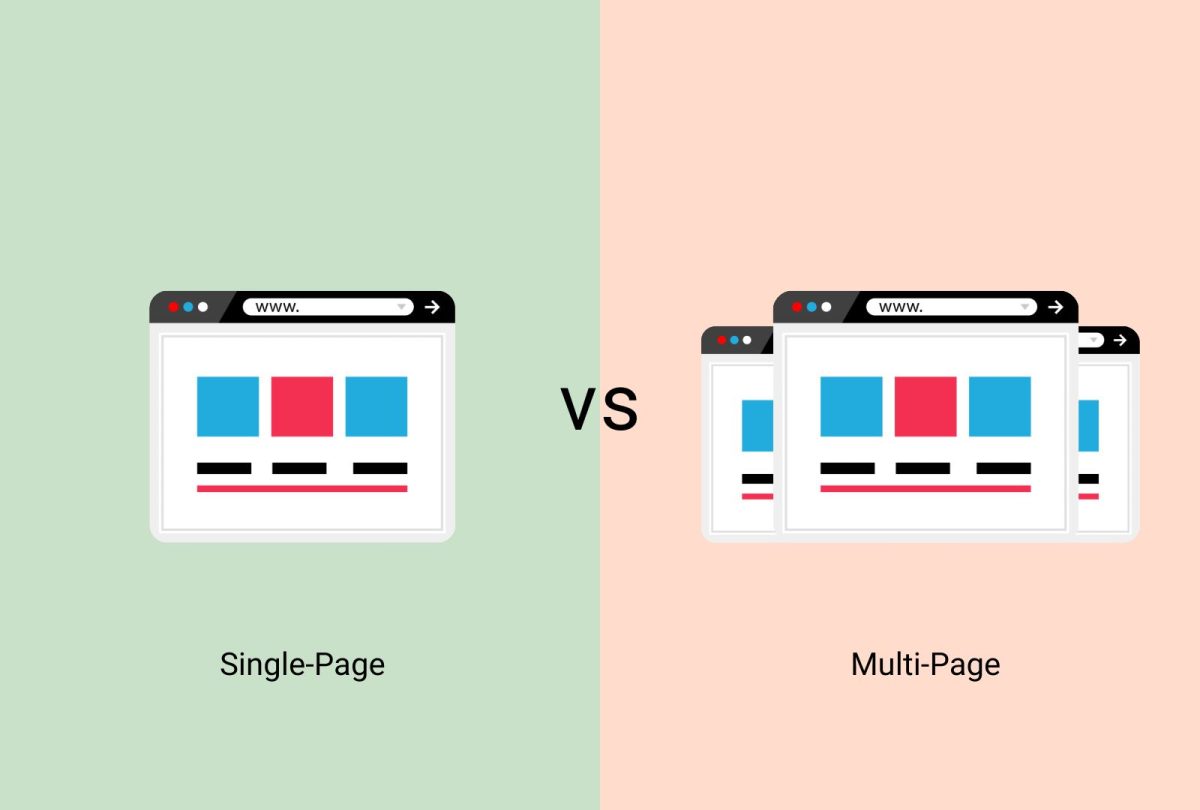
- A single-page website presents all content on one long scrolling page
- A multi-page website separates content across multiple URLs and pages
The strategic implications, however, are anything but simple.
What Is a Single Page Website?
How Single Page Websites Work
A single-page website loads all primary content onto one page, usually divided into sections such as About, Services, Features, and Contact. Navigation links scroll users to specific sections instead of loading new pages.
This structure prioritises flow and simplicity.
Advantages of Single-Page Websites
Focused Messaging
Single-page sites excel at telling one clear story. With fewer distractions, users move through content in a controlled sequence.
Faster Perceived Load Time
Because there are fewer page transitions, single-page websites can feel faster, especially on mobile devices.
Simple User Experience
For users seeking quick information or a single action, such as filling out a form, the experience is straightforward and intuitive.
Limitations of Single-Page Websites
SEO Constraints
From an SEO perspective, single-page websites face clear limitations. Search engines index pages, not sections. When all content lives on one URL, you lose the ability to target multiple keywords effectively.
Google’s own documentation explains that distinct URLs help search engines better understand and rank content for specific queries.
Limited Content Scalability
As a business grows, content needs grow with it. Adding blog posts, landing pages, or detailed service explanations becomes awkward on a single-page layout.
What starts as “clean” often turns into “crowded.”
Analytics and Conversion Tracking Challenges
Tracking user behaviour is less granular. Measuring which content drives conversions becomes harder when everything exists on one page.
What Is a Multi-Page Website?
How Multi-Page Websites Work
A multi-page website distributes content across multiple pages, each with its own URL, title, and purpose. Navigation allows users to move between pages rather than scroll through everything at once.
This structure supports depth, hierarchy, and long-term expansion.
Advantages of Multi-Page Websites
Stronger SEO Performance
Multi-page websites allow each page to target specific keywords, search intent, and topics. This is foundational for organic growth.
Moz outlines how structured internal linking and page-level optimisation improve crawlability and rankings over time.
Better Content Organisation
Multi-page sites allow clear separation of information. Users can find exactly what they need without wading through unrelated sections.
This improves usability, reduces bounce rates, and supports accessibility standards.
Scalability for Growing Businesses
Adding new pages does not disrupt the entire site. Blogs, resource hubs, and location pages integrate naturally into a multi-page structure.
This flexibility is essential for businesses planning long-term digital growth.
Challenges of Multi-Page Websites
Without thoughtful navigation, multi-page websites can overwhelm users. Structure matters. Poor hierarchy causes friction fast.
Slightly Higher Maintenance
More pages mean more updates, optimisation, and monitoring. That said, this is a trade-off for control, not a drawback when managed properly.
Single-Page vs Multi-Page: SEO Comparison
Indexing and Rankings
Search engines reward relevance and clarity. Multi-page websites win here because each page can focus on one topic and one primary keyword.
Single-page websites can rank, but typically only for branded terms or very narrow queries.
Internal Linking
Multi-page sites benefit from internal links that distribute authority and guide search engines through content relationships. Single-page sites lack this advantage.
Content Freshness
Publishing new pages signals growth and relevance to search engines. A single-page structure limits how often meaningful new content can be added without restructuring.
Conversion and User Intent
When Single-Page Websites Convert Better
Single-page websites can outperform when:
- The goal is one action
- The offering is simple
- The audience already understands the product
Landing pages and campaign-focused sites often use this model effectively.
When Multi-Page Websites Convert Better
Multi-page websites perform better when:
- Users need education before converting
- Trust-building content matters
- The business offers multiple solutions for audiences
For most established businesses, this is the reality.
Choosing the Right Structure for Your Business
A Single-Page Website Makes Sense If:
- You have one clear message
- SEO is not your primary growth channel
- Content depth is intentionally limited
A Multi-Page Website Makes Sense If:
- Organic search traffic matters
- You plan to publish content regularly
- Your business will evolve over time
For WordPress-based projects, we recommend aligning your site structure with your content roadmap and SEO strategy from the start. If your goal is to rank for multiple keywords, publish ongoing content, and support long-term growth, a multi-page layout provides the flexibility and structure needed to scale.
On the other hand, if your business has a single, focused message and limited content requirements, a well-executed one-page design can reduce complexity while keeping conversions efficient. In both cases, performance still matters. Reliable hosting and proper optimisation play a critical role in ensuring fast load times, stability, and a smooth user experience regardless of site structure.
This is why we always treat website structure as part of the technical foundation, not just a design choice. Thoughtful planning upfront prevents costly rebuilds later.
A Practical Middle Ground
Many modern websites combine both approaches: a strong multi-page foundation with focused, single-page layouts for specific campaigns or initiatives.
This hybrid approach delivers flexibility without sacrificing SEO performance or clarity.
At Pressific, we consistently see businesses benefit when website structure is treated as infrastructure rather than decoration. A well-architected WordPress site supports long-term flexibility without locking the business into short-term decisions, with that structure sustained through our WordPress management services as the site evolves.
Conclusion
The single-page vs multi-page debate is not about trends. It is about alignment.
A website should support how your business grows, how users search, and how content evolves. For most businesses aiming for visibility, authority, and long-term ROI, a multi-page structure provides the foundation needed to scale responsibly.
Choose a structure with intent. Your future traffic will thank you.