Table of Contents
If your website feels sluggish, visitors will not politely wait around. They bounce, conversions drop, and search engines quietly move you down the food chain.
That is where website caching steps in.
Caching is one of the most effective (and most misunderstood) ways to improve page speed, stabilise performance during traffic spikes, and deliver a smoother user experience. When implemented properly, it reduces server load, shortens load times, and helps your site feel instantly responsive, even on mobile connections.
In this guide, we break down what website caching actually is, how it works, why it matters for SEO and usability, and what smart site owners should be thinking about from an operational perspective.
What Is Website Caching?
Website caching is the process of storing a temporary copy of website files so they can be delivered faster the next time they are requested. Instead of rebuilding a page from scratch every time someone visits it, the system serves a pre-generated version.
Think of it this way. Without caching, your server processes PHP, queries the database, assembles content, applies styles, and generates HTML for every single visitor. With caching enabled, that heavy work is done once, then reused.
This reduces server load and dramatically improves page load speed.
How Caching Works in Simple Terms
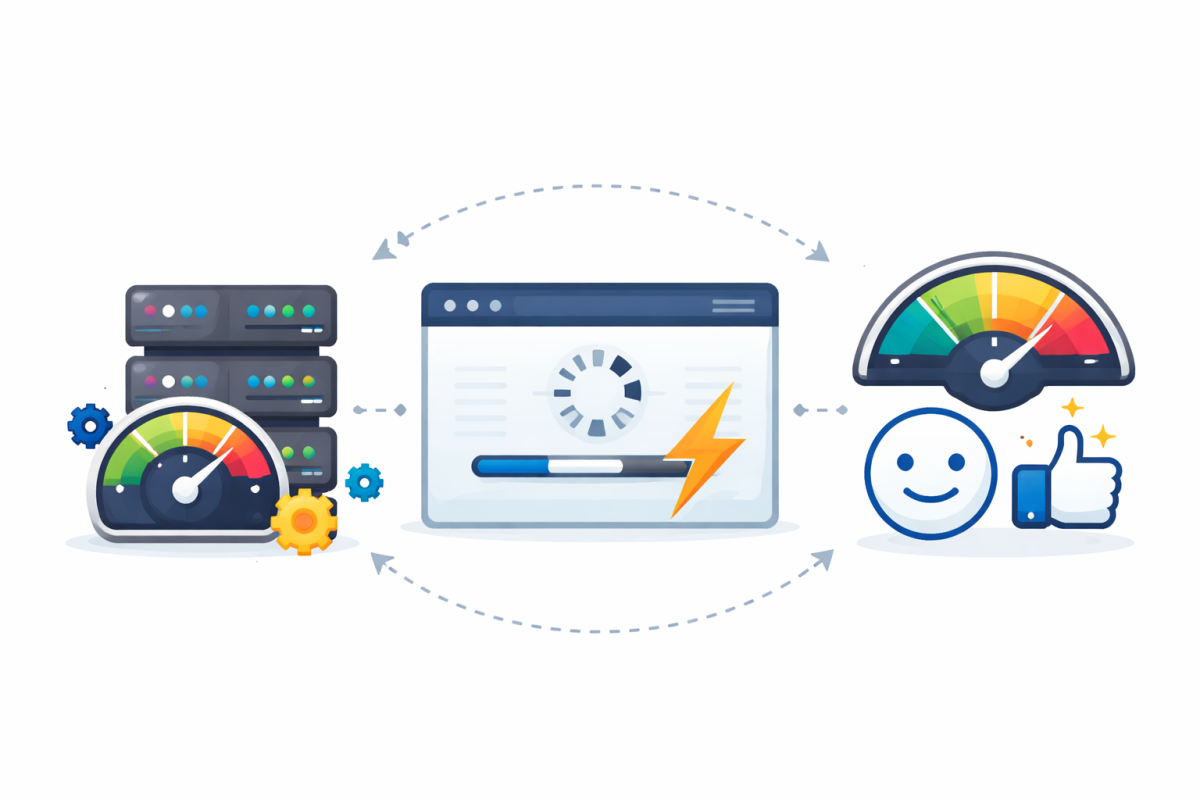
When a visitor lands on your website, their browser sends a request to your server. If no cache exists, the server builds the page in real time. That takes time and computing resources.
If caching is enabled:
- The server checks whether a stored version of the page already exists.
- If it does, the server sends that version immediately.
- The visitor sees the page faster.
- The server saves resources for future requests.
The result is faster delivery, lower infrastructure strain, and a smoother user experience.
Why Website Caching Is Critical for Speed
Speed affects everything. Rankings, conversions, user trust, and even operational costs.
1. Faster Page Load Times
Page speed directly impacts user behaviour. Data from Google has consistently shown that as page load time increases, bounce rate increases. Users simply do not wait.
Caching reduces:
- Time to First Byte
- Full page rendering time
- Repeated database calls
- Server processing load
If your site takes five seconds to load, you are losing visitors. If it loads in under two seconds, you are competing.
2. Better Core Web Vitals Performance
Core Web Vitals are performance metrics used by Google to measure user experience. These include:
- Largest Contentful Paint
- First Input Delay
- Cumulative Layout Shift
While caching alone does not solve every performance issue, it plays a major role in improving load metrics by reducing backend processing time.
Caching is not optional if performance matters.
3. Lower Server Resource Usage
Without caching, every visitor triggers database queries and PHP execution. Multiply that by hundreds or thousands of users, and your server starts sweating.
Caching reduces CPU and memory usage, which results in:
- Greater stability under traffic spikes
- Lower risk of downtime
- More efficient hosting utilisation
That is not just a technical win. It is a financial one.
Types of Website Caching
Caching is not a single tool. It is a layered strategy.
Browser Caching
Browser caching stores static files such as images, CSS, and JavaScript locally on a visitor’s device. When they return to your site, those files do not need to be downloaded again.
According toMozilla documentation, proper browser caching significantly reduces repeated load times for returning users.
This improves perceived speed and enhances user experience for repeat visitors.
Server-Side Caching
Server-side caching stores fully generated HTML pages or pre-processed data on the server itself.
For WordPress environments, this means:
- Reducing database queries
- Minimising PHP execution
- Delivering static HTML instead of a dynamic assembly
This is one of the most powerful ways to improve performance on content-driven websites.
Object Caching
Object caching stores database query results so repeated requests for the same data do not require repeated queries. On larger WordPress sites, this prevents bottlenecks and improves scalability.
CDN Caching
A Content Delivery Network distributes cached versions of your site across multiple geographic locations. When a user visits, content is served from the nearest server.
Cloudflare provides extensive documentation explaining how edge caching reduces latency and improves global delivery.
For international traffic, CDN caching is a performance multiplier.
How Caching Impacts User Experience
Performance is not just a technical metric. It shapes perception.
When pages load instantly:
- Users feel confident in the brand
- Navigation feels seamless
- Engagement increases
- Conversion likelihood improves
When pages lag:
- Trust decreases
- Frustration rises
- Bounce rates spike
Even a one-second delay in page load can reduce customer satisfaction and conversion rates significantly.
User experience is emotional. Speed influences emotion.
Caching and SEO Performance
A technically optimised site that loads quickly is easier to crawl and index. Caching reduces server strain, which improves uptime and reliability. Stability matters for search engine bots.
Strong caching contributes to:
- Improved crawl efficiency
- Faster rendering
- Reduced server errors
- Better performance metrics
Technical SEO is not about tricks. It is about infrastructure.
Common Caching Mistakes to Avoid
Caching is powerful, but poorly configured caching can cause problems.
Serving Stale Content
If cache expiration rules are not properly managed, visitors may see outdated content. A proper invalidation strategy is critical.
Ignoring Dynamic Pages
Not every page should be cached. Checkout pages, user dashboards, and personalised content require careful configuration.
Overlapping Caching Layers Without Coordination
Stacking browser caching, server caching, object caching, and CDN caching without understanding how they interact can cause conflicts.
Professional environments require controlled configuration, not guesswork.
Website Caching in WordPress Environments
WordPress is dynamic by design. Every page load typically involves PHP execution and database queries.
Without caching, performance degrades quickly under traffic growth.
A properly structured WordPress caching strategy typically includes:
- Server-level page caching
- Object caching for database efficiency
- Browser caching rules
- CDN integration for global performance
- Automatic cache purging on content updates
This requires not only plugins but infrastructure alignment. Hosting architecture, server stack, and CDN configuration must work together.
Technical performance is not about installing a tool and hoping for the best. It requires coordinated execution.
Why Professional Caching Configuration Matters
Caching affects SEO, user experience, and infrastructure costs. A misconfiguration can break functionality or serve incorrect content. A well-implemented setup can transform performance metrics.
Managed WordPress environments that integrate optimised server stacks, edge delivery networks, and structured cache control provide stability and scalability that standalone configurations often struggle to match.
Performance optimisation is not a one-time task. It requires monitoring, updates, and alignment with evolving web standards.
If website speed, uptime stability, and technical SEO performance are serious priorities, your infrastructure strategy needs to reflect that. Learn more about structured WordPress performance environments at pressific.com.
Also, read
Final Thoughts
Website caching is a core part of building fast, reliable WordPress websites, and it directly affects user experience, search visibility, and long-term performance. When configured correctly, it reduces server load, improves page delivery, and creates a smoother experience for visitors across devices. At Pressific, caching is treated as operational infrastructure rather than a one-time optimisation, particularly as websites evolve through ongoing content updates, plugin changes, and security patches.
For that reason, caching is integrated into a broader performance strategy that includes hosting configuration, update workflows, and continuous monitoring. A structured caching setup helps ensure your site remains stable, responsive, and ready to scale as your business grows, which is exactly how WordPress environments are designed and maintained at Pressific.